


Targeting Growth in Flexible Packaging


As the industry evolved, SunDance recognized the need to adapt. While commercial print experienced a downturn, flexible packaging emerged as one of the few segments with consistent growth. Identifying this as a strategic opportunity, SunDance made a deliberate move to expand into packaging, building on its existing foundation and broadening its portfolio with wide-format printing, mailing services, labels, folding cartons, and ultimately flexible packaging.
“Some of our label clients wanted flexible packaging,” says JohnHenry Ruggieri, president of the Orlando, Florida-based company. “Our general philosophy has been that if we’re going to offer it, we’re going to manage it and produce it. That mindset has really guided our growth.”
Despite its many benefits, though, producing flexible packaging can be complex, as it is largely printed using wide-web flexographic or rotogravure presses and necessitates extensive finishing and converting processes. As technology advances, however, the barriers to entry into flexible packaging are lowering, and printing companies are increasingly targeting it as an ideal expansion opportunity.
Why Flexible Packaging and Why Now?
In 2018, Alliance Insights, the research division of PRINTING United Alliance, conducted its inaugural study of printing industry “convergence.” The study revealed that printers across the industry were actively seeking to expand their capabilities beyond their core segments and to enter entirely new print markets. Labels and packaging emerged as primary targets for print service providers, as these segments have shown consistent demand and growth trajectories, unlike many commercial print applications that have declined or plateaued due to digitization.
However, packaging is drastically different than commercial printing. Those seeking to make a convergence move into these segments not only need to learn the nuances of the market, but also the production complexities packaging presents. This has made labels and folding cartons ideal entry points into the segment, as labels offer the familiarity of a two-dimensional application. In contrast, folding cartons are typically printed using sheetfed processes, which are already commonly understood by commercial printers.
But the rapid growth trajectory of flexible packaging has made it appealing to those on the outside looking in. According to the “2025 State of the U.S. Flexible Packaging Industry Report,” an annual study conducted by the Flexible Packaging Association (FPA), the industry accounted for approximately $42.6 billion in sales in 2024, a nearly 3% increase from 2023. Further, the FPA reports that flexible packaging accounts for approximately 20% of the U.S. packaging market, making it second only to the corrugated segment at 28%.
The health of the flexible packaging segment has led more printers to add these capabilities. Alliance Insights’ 2026 report, “Profiting Through Convergence,” reveals that 53% of package printers, 20% of commercial printers, 18% of wide-format graphics printers, and even 9% of apparel decorators surveyed have entered the flexible packaging segment. Meanwhile, these printers that have added flexible packaging report a positive impact on their revenue and profit, indicating, on average, a 6% revenue increase and 4.4% profit boost.
Finding the Right Flexible Packaging Fit
Part of what has made flexible packaging such a challenging convergence target is that it is almost entirely printed using very large, wide-web flexographic or rotogravure presses. Not only does this equipment require skilled operators, but it also commands a significant physical footprint within a printing plant. For many years, the need for both skilled labor and floor space has kept flexible packaging production largely confined to dedicated converters.
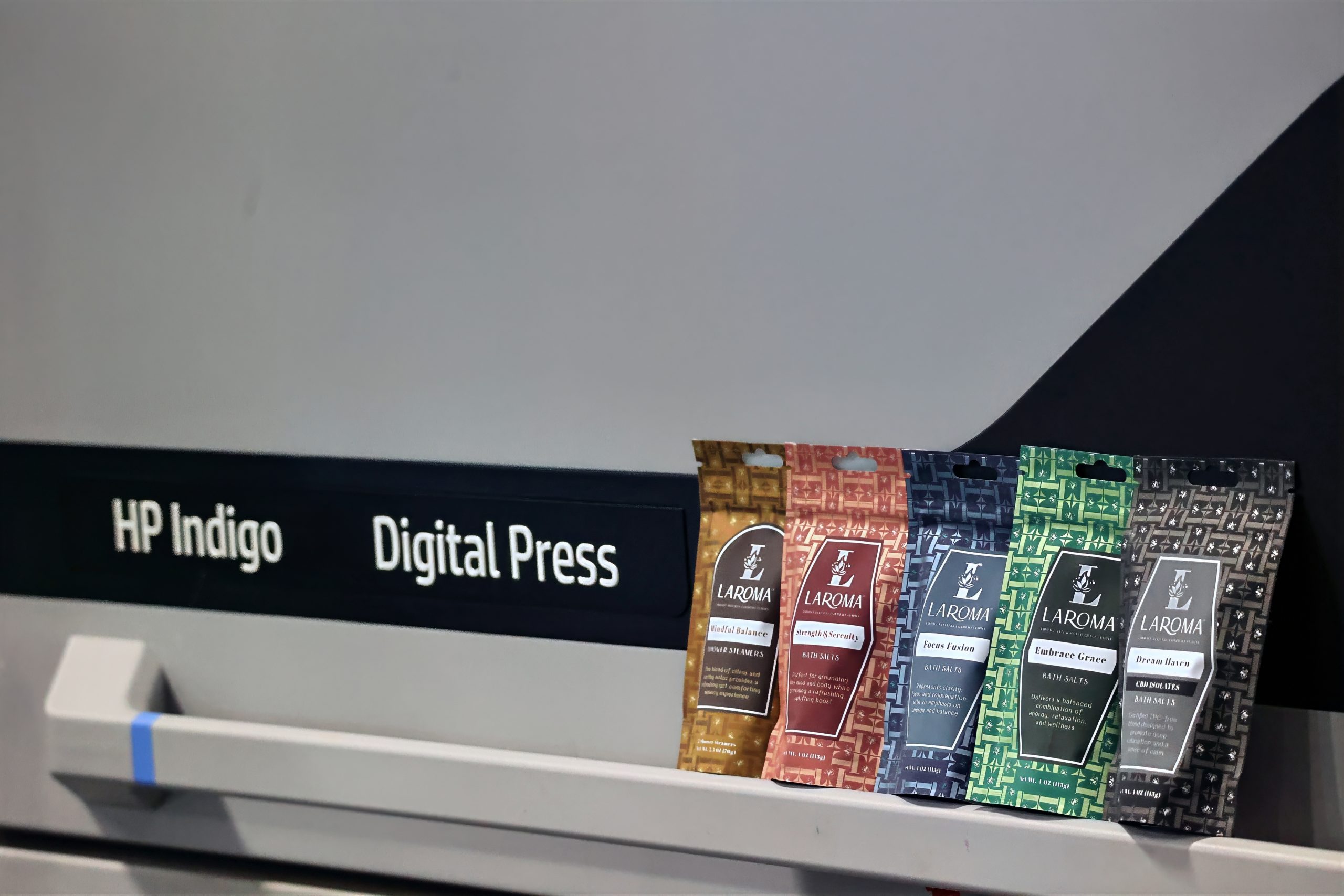
Lauterbach Group utilizes the HP Indigo digital printing platform to support flexible packaging production for middle-market brands. | Credit: Lauterbach Group
However, the advent of digital printing technology has made flexible packaging more accessible to printing companies outside the segment and to smaller brands that need shorter runs and lower volumes. For The Lauterbach Group, adding flexible packaging capabilities was a natural fit, as it satisfied multiple elements of its growth strategy. Historically, the Sussex, Wisconsin-based company has focused primarily on label printing and converting, operating in-line flexographic presses while expanding its digital label printing capabilities on the HP Indigo platform.
According to President and CEO Shane Lauterbach, the company is continually focused on investing in its equipment and technology ecosystem, while seeking out product expansion opportunities that would be most valuable to its customer base. He explains that Lauterbach Group primarily focuses on middle-market brands, which made the advent of digital printing technology for flexible packaging particularly attractive.
Since deciding to expand into flexible packaging, Lauterbach Group has invested in an HP Indigo 25K digital press and plans to install an Indigo 200K. Beyond digital printing, the company collaborated with Gonderflex to install a thermal lamination unit featuring multiple flexo decks, a digital embellishment unit, and slitting capabilities. With these digital printing and finishing capabilities, Lauterbach says that mid-sized brands can now access efficient, cost-effective, high-quality packaging that may previously have been out of reach.
“I think when you’re dealing with the middle brand, if you can provide speed, if you can provide ease, and if you can provide highly decorated products, you’re allowing that middle market to have what the very largest brands have and spent a lot of time, money, and energy trying to figure out,” Lauterbach says. “Because of this digital tipping point, you’re able to really offer the middle market whatever they need, when they need it, in the specifications that they need it in.”
Learning the Market
While the advent of digital printing equipment for flexible packaging has lowered barriers to entry in the segment, printing is just a fraction of what is needed for a successful flexible packaging business. In addition to finishing and converting processes, flexible packaging’s functionality and end-use requirements are unique to the segment.
SunDance first expanded into labels in 2019, further strengthening its packaging capabilities. From there, the company continued to invest in flexible packaging, gradually adding equipment and refining processes over time to ensure it could deliver the same level of quality and consistency its customers expect.
Entering the flexible packaging market also meant stepping into new territory, particularly with direct food contact applications. With food representing a significant portion of the flexible packaging market, SunDance prioritized building the necessary expertise and quality control systems to meet the highest safety standards.
“That was such a huge shift for us, moving from secondary packaging like folding cartons to being the primary food barrier,” Ruggieri says. “It raised the bar for everything we do, from materials to processes.”
To support this transition, SunDance worked closely with its technology partners, including HP Indigo, and leveraged industry resources such as the FPA to build knowledge and ensure best practices.
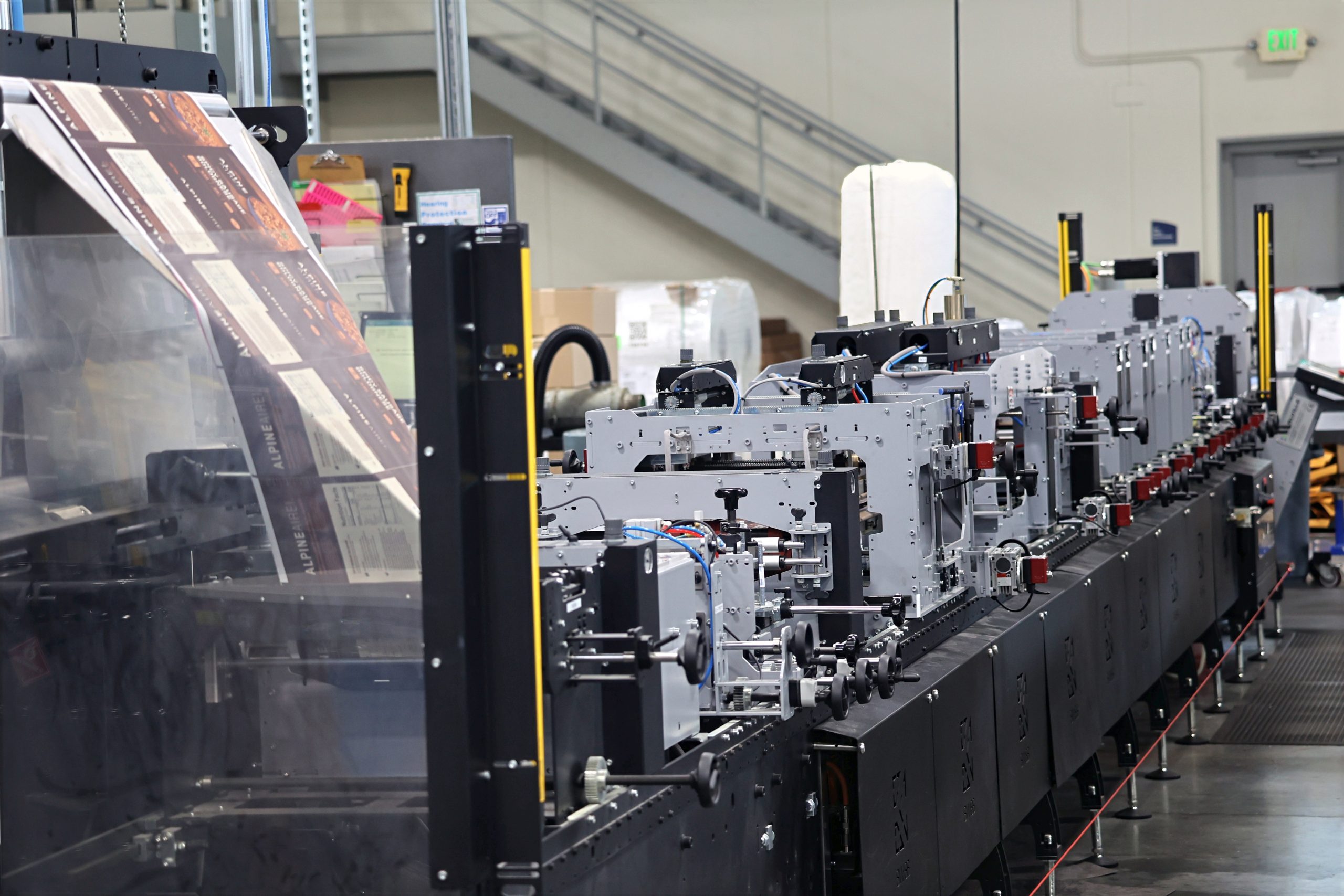
A flexible packaging job runs through the poucher at Lauterbach Group in Sussex, Wisconsin. | Credit: Lauterbach Group
For the Lauterbach Group, one of the first steps in adding flexible packaging to its label-printing operation was to engage and qualify new suppliers. With different materials being used throughout the production process, Lauterbach explains that the company had to ensure it understood how to use these materials and run them effectively through the new equipment.
Quality control and assurance were also critical, with the company quickly learning that any change to a flexible packaging material had to be tested and validated before it could be used in a production run. Although this is similar in the label segment, Lauterbach explains that the company’s familiarity with those materials and consumables helps expedite testing. When learning the nuances of flexible packaging, these changes could result in a loss of efficiency and material waste.
“Your rate of change of qualifying that material and bringing it to the market has to accelerate super fast,” he says. “There are challenges at every one of those steps in the wheel. And not little ones. You can waste material like crazy, slow speed down, and increase spoilage and reruns because of multiple factors.”
Sales and customer service training were also a core component of Lauterbach Group’s expansion into flexible packaging. Though Lauterbach says the company’s strong culture of relationship-based selling and service, in which phone calls, video calls, and face-to-face interactions supersede email, has been successful, bringing a new product line on board required dedicated training.
The company turned to external training providers to help with the sales, service, and manufacturing skills needed in the flexible packaging market. It also adjusted its ERP and CRM platforms to accommodate the new product offerings. Lauterbach says that this education and infrastructure have been critical to the company’s flexible packaging success, as it recognized that printing was just one component of the expansion.
“I think people lose sight of that and say, ‘Well, I can print it, therefore I can sell it,’” Lauterbach says. “No, that’s not the case.”
Positioning for Further Growth
Despite the challenges of expanding into flexible packaging, it has proven lucrative for those who have made the move. Lauterbach says that while it took the company approximately 18 months to truly gain its footing in the segment, he anticipates its revenue from pouches to double this year and again in 2027. He adds that as brand owners continue to explore shifting from rigid structures to flexible packaging, Lauterbach Group will aim to stay at the forefront of innovation in the segment, whether via sustainability attributes or new features.
“What we’ll do is start adding more ancillary features to the pouches, so we’ll continue on that journey,” he says. “Sustainability is very important to us and there are some very neat opportunities not only in recycled content and that kind of methodology, but downgauging, using less material, and the great power that has to the overall economic benefit.”
SunDance’s investment in flexible packaging has quickly translated into innovation and recognition. SunDance earned a silver award in the shelf impact category at the 2026 Flexible Packaging Association Achievement Awards for its pet food pouches produced for Clear Conscience Pet. The project featured soft-touch lamination, spot UV, and a resealable zipper across multiple SKUs.
SunDance is also among a select group of licensees producing the POUCH3 Cuboid pouch, recipient of the FPA’s 2026 Highest Achievement Award. Developed by Sun Centre USA, the format offers sustainability advantages, including up to 30% less material usage compared to traditional pouches, recyclability via low-density polyethylene, and improved stackability for efficient packing.
Ruggieri credits the company’s team and culture for successfully navigating this evolution. From the beginning, SunDance has embraced learning, adaptability, and continuous improvement, values that have supported its expansion into new markets and technologies.
“We started out as a commercial printer, but our team has always been open to learning new equipment and exploring new opportunities,” he says. “That’s really how we’ve grown, by continuously expanding what we can offer our clients.”
- Categories:
- Business Management - Industry Trends
Cory Francer is Content Director for Packaging Impressions. Before that, he was an Analyst with Alliance Insights, where he led the team’s coverage of the dynamic and growing packaging market. With a decade of experience as a professional journalist and editor, Cory brings an eye for storytelling to his packaging research, providing compelling insight into the industry's most pressing business issues. He is an active participant in many of the industry's associations and has played an essential role in the development of the annual Digital Packaging Summit. Cory can be reached at cfrancer@napco.com


