


AI in Print Is Entering Its Next Phase


The following article was originally published by Printing Impressions. To read more of their content, subscribe to their newsletter, Today on PI.
Artificial intelligence (AI) is quickly becoming part of everyday business in the printing industry. But the next phase of AI adoption will require more than giving employees access to ChatGPT or other AI tools.
Alliance Insights' new study, AI in Print: Data Readiness, Technology Alignment, and Unlocking High-Value Use Cases, surveyed 294 print providers across printing industry segments to examine where AI adoption stands today, where it is headed next, and how prepared companies are for more advanced applications. The research finds that 38% of print providers have already deployed AI in at least one business function, yet only 12% have a formal AI strategy in place (Figure 1). The gap points to one of the study's central findings: AI adoption is moving faster than AI maturity.
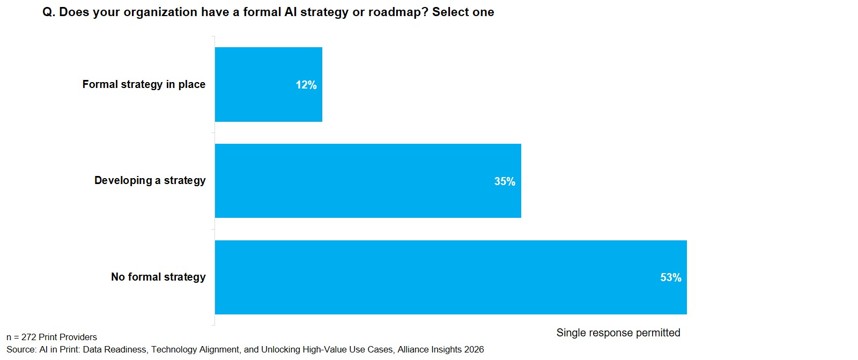
Figure 1: AI Adoption is Moving Faster Than AI Strategy. | Click to enlarge.
AI Is Moving Deeper Into the Business
So far, much of AI use has centered on general-purpose tasks such as writing, research, brainstorming, creative content, and data analysis. But printers are now looking toward applications much closer to the operational and financial core of their businesses. More than half of respondents express interest in using AI for inventory optimization, estimating and quoting, predictive maintenance, automated job intake and preflight, quality inspection, and purchase-order/invoice/job-ticket reconciliation (Figure 2).
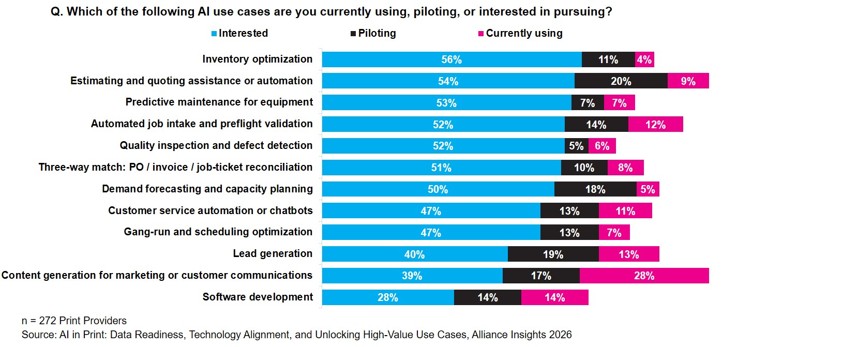
Figure 2: AI Moves Deeper Into Print Operations. | Click to enlarge.
Higher-Value AI Raises the Stakes
An AI tool drafting an email requires relatively little connection to a company's core business systems. An AI application recommending a price, optimizing a production schedule, forecasting demand, or making an inventory decision needs reliable business data, connected systems, clearly defined processes, and appropriate controls. It also raises questions about intellectual property and control.
As AI begins working with pricing logic, customer histories, production rules, margins, and institutional knowledge, printers need to consider what information should be shared with outside AI platforms, what should remain under greater company control, and how proprietary knowledge can become part of their AI capabilities. In other words, access to AI is becoming commonplace. The greater differentiator may be the proprietary knowledge, data, and judgment a printer brings to it.
And that is where many print providers still have work to do. Only about 14% describe their core systems as mostly or highly integrated. Manual data-entry errors are the most commonly reported data-quality challenge, and only 25% have fully established formal data-governance policies.
Building the Foundation for AI Maturity
The research also found an important difference among more advanced AI adopters. Companies classified as AI leaders are further ahead not just in using AI, but also in data governance, system integration, AI governance, knowledge capture, and putting operational data to work.
The takeaway is not that printers need a perfect technology infrastructure before pursuing AI. Several case studies in the report show companies creating measurable value with existing systems and data. Instead, the research points toward a more practical approach: advance AI adoption and organizational readiness together.
Download the full study to find out where AI adoption stands today, where printers are looking next, and what organizations need to put in place to move from experimentation toward sustainable business value.
Alliance Insights thanks CAI, Clients First, NetSuite, and Significans Automation for their support of this research.
- Categories:
- Artificial Intelligence (AI)


